
Live session · Module 3
Testing Equipment & Safety
Scan to join — no app, no login. You present the slides; questions pop as live polls.
Join at
…
Room code
····
0 joined
Module 3 · Testing Equipment & Safety
Module 3: Testing Equipment and Safety
Module 3 covers the tools and safety needed to test the solar system.
Module 3 · Testing Equipment & Safety
Testing on a Regular Basis
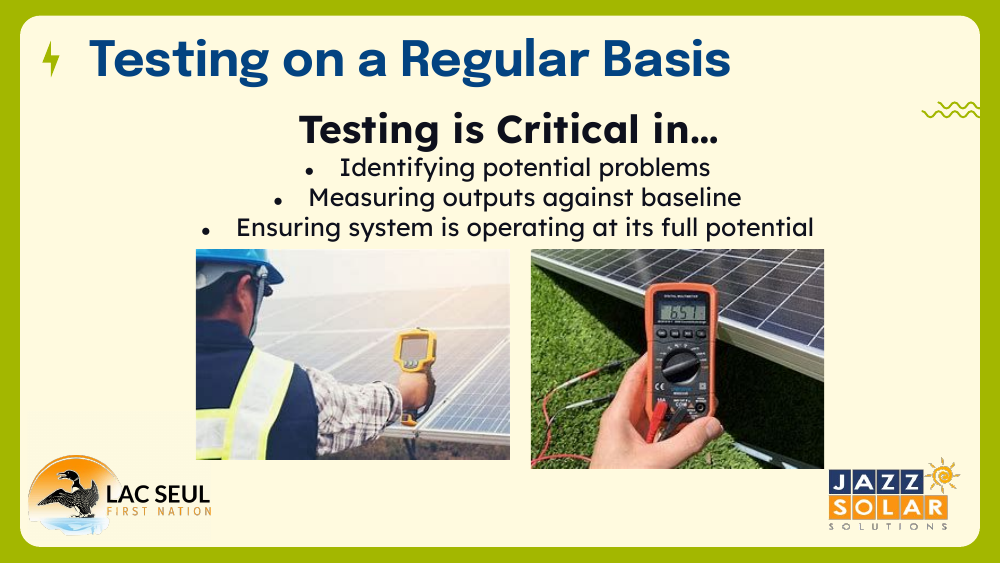
Testing helps you find problems early and confirm the system runs at full potential.
Module 3 · Testing Equipment & Safety
Hand Tools
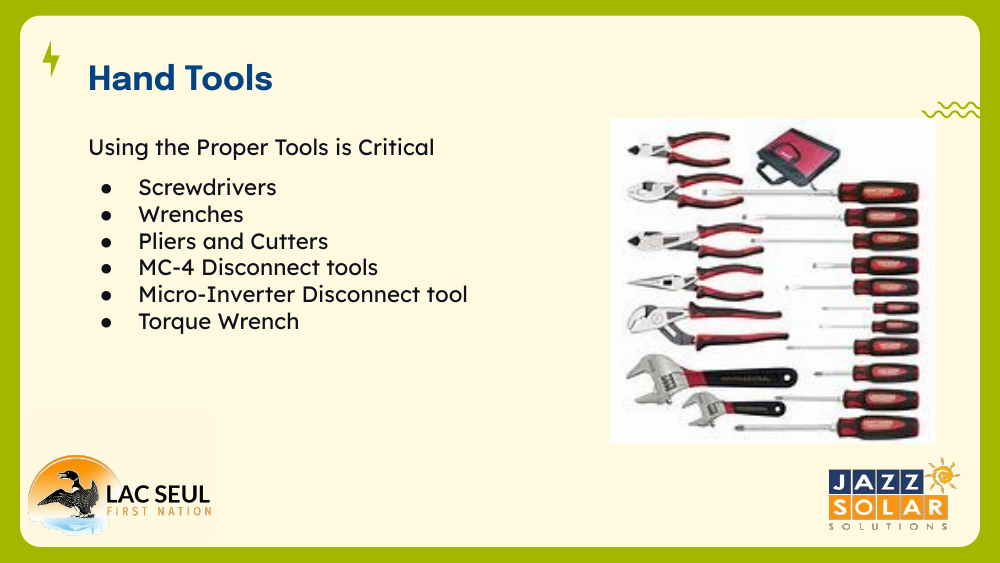
Using the proper tools for the job is critical.
Module 3 · Testing Equipment & Safety
Screw Drivers
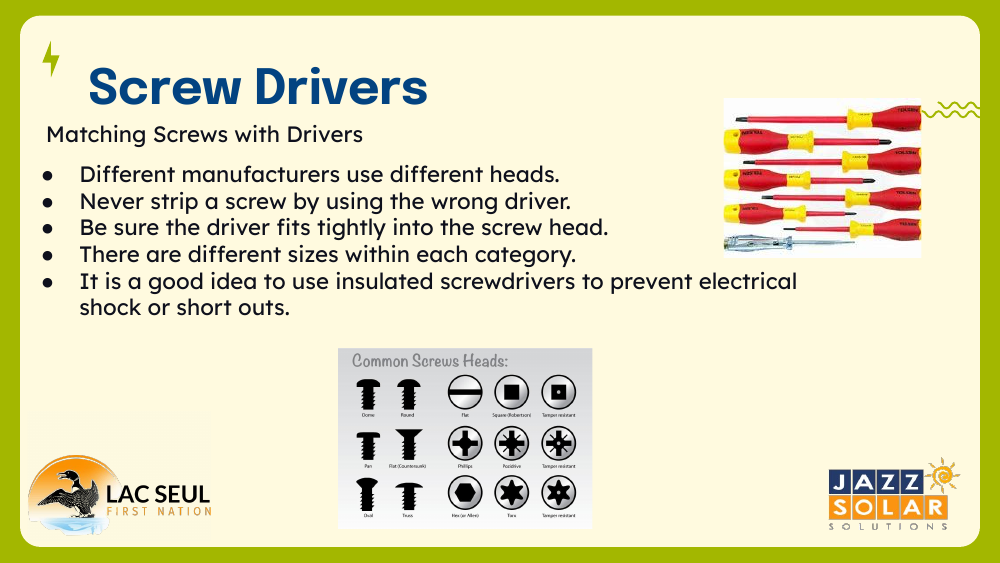
Use insulated screwdrivers to help prevent electric shock or short outs.
Module 3 · Testing Equipment & Safety
Wrenches and Sockets / Driver
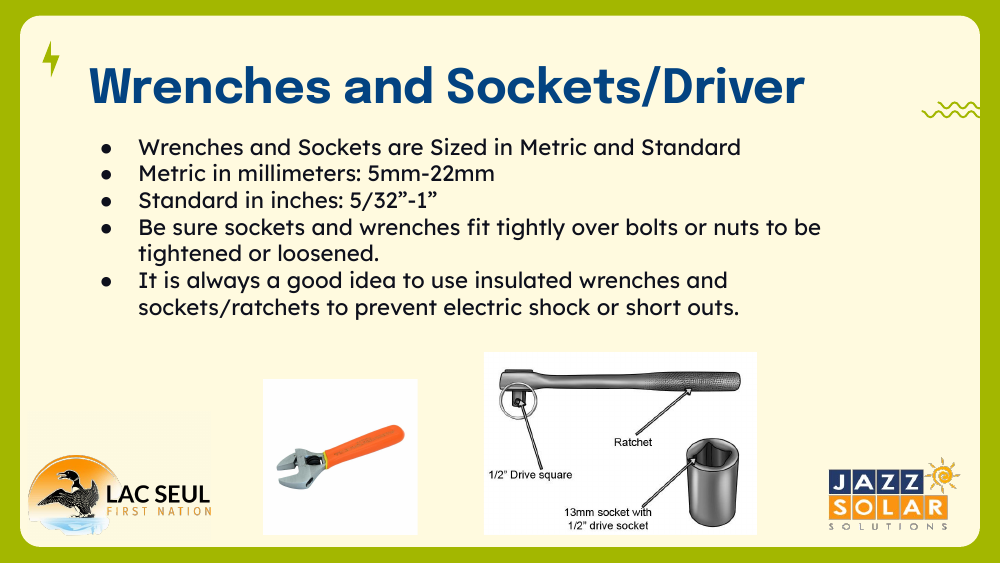
Use insulated wrenches and sockets to help prevent electric shock or short outs.
Module 3 · Testing Equipment & Safety
Pliers
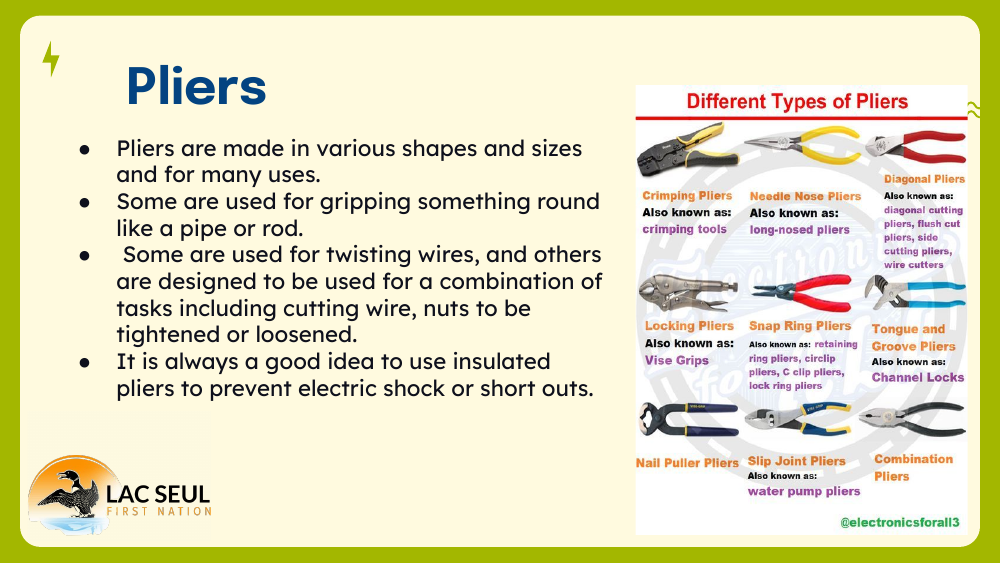
Use insulated pliers to help prevent electric shock or short outs.
Module 3 · Testing Equipment & Safety
Wire Cutters and Strippers
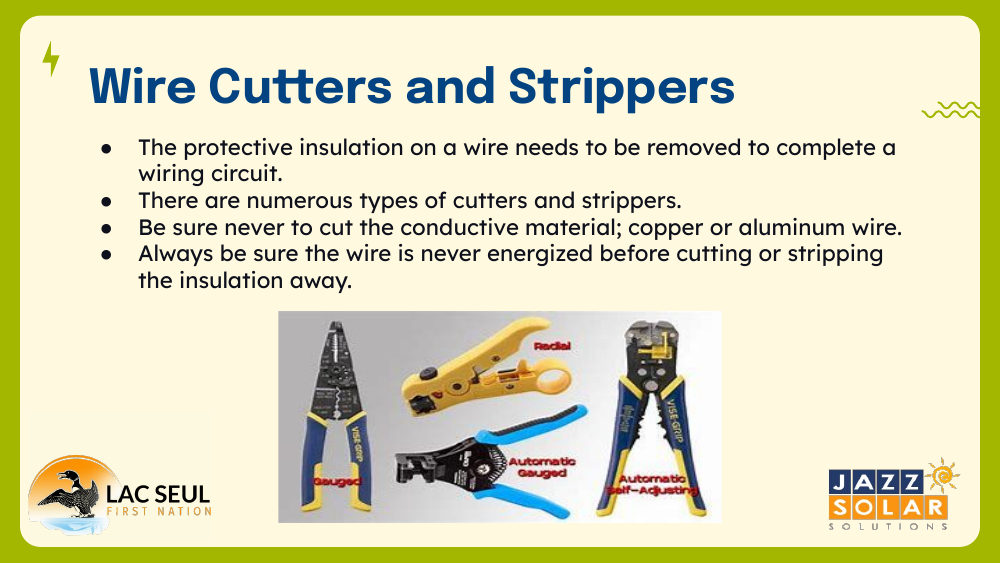
Always make sure the wire is never energized before cutting or stripping.
Module 3 · Testing Equipment & Safety
MC-4 Crimpers and Disconnect Tool
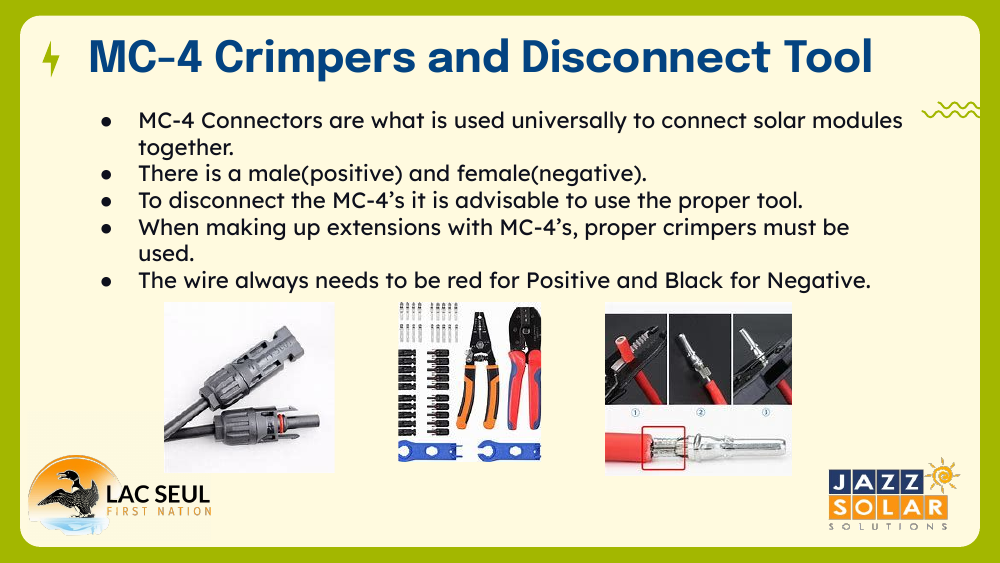
Wire color: red for positive, black for negative.
Module 3 · Testing Equipment & Safety
Micro-Inverter Attachment Tool
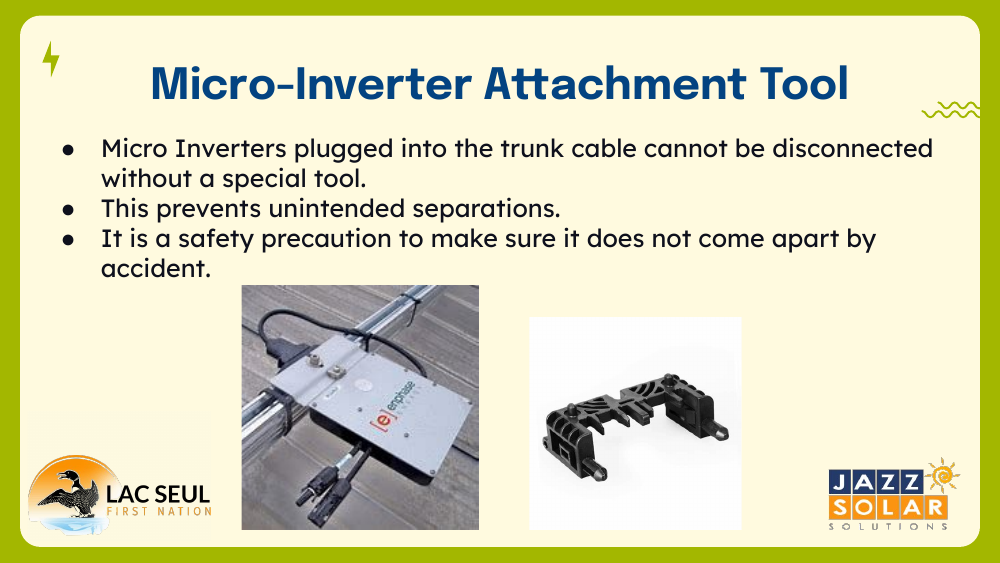
This prevents the connector from coming apart by accident.
Module 3 · Testing Equipment & Safety
Torque Wrenches
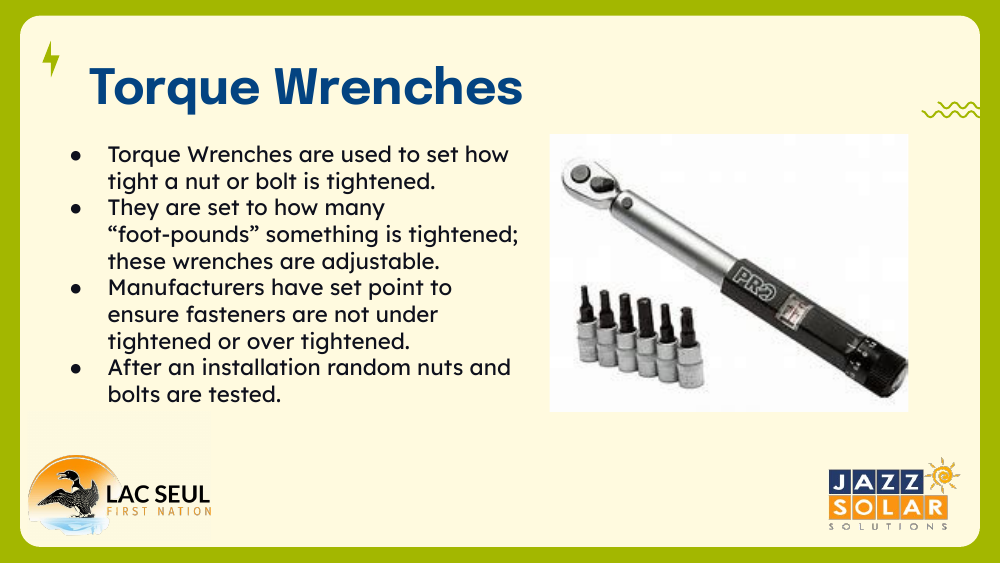
Set to the maker's point so fasteners are not under- or over-tightened.
Module 3 · Testing Equipment & Safety
Multimeters
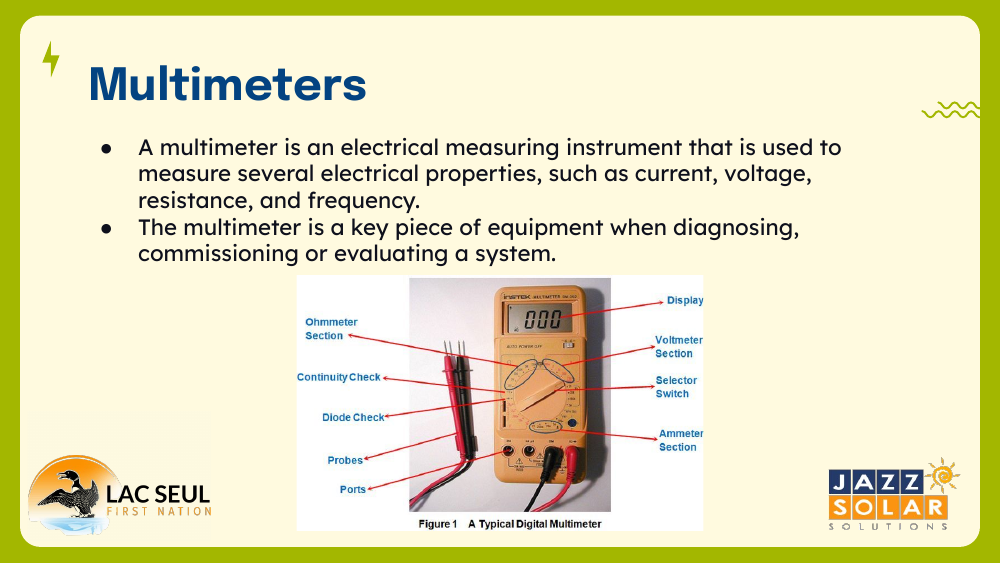
Key tool when diagnosing, commissioning, or evaluating a system.
Module 3 · Testing Equipment & Safety
Multimeters - Testing Voltage
Face the panel perpendicular to the sun; check VOC on the back sticker.
Module 3 · Testing Equipment & Safety
Multimeters - Testing Amperage (Current)
Set the meter to amps and test in direct sunlight - the reading should be close to the Isc on the panel label.
Module 3 · Testing Equipment & Safety
Multimeters - Testing Continuity
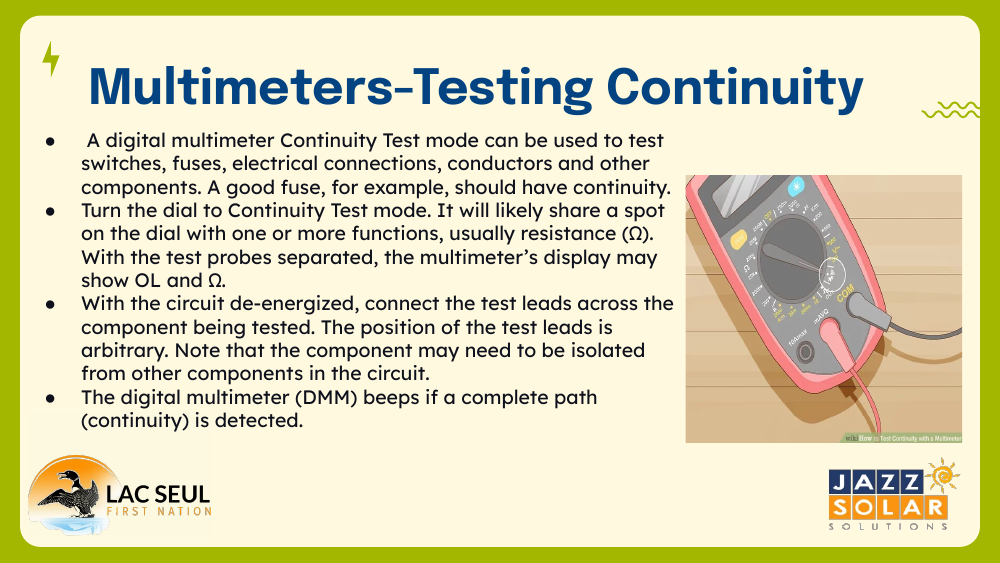
A beep means a complete circuit - no beep means a break in the wire or connection.
Module 3 · Testing Equipment & Safety
Determining Wattage (Power) of a Panel
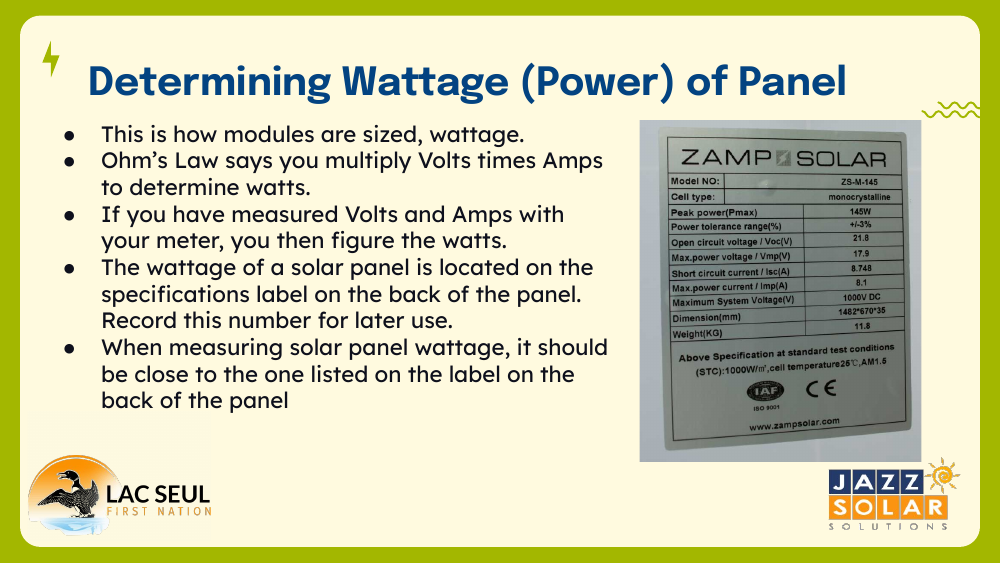
Watts = Volts x Amps - your measured wattage should be close to the value on the back label.
Module 3 · Testing Equipment & Safety
Using a Clamp Meter
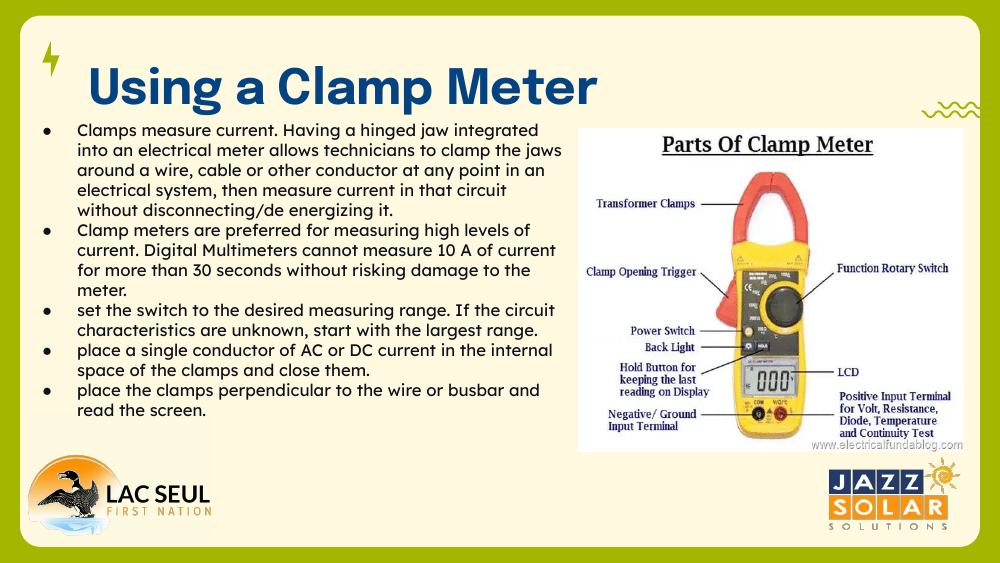
Clamp around a single conductor and start at the largest range if the circuit values are unknown.
Module 3 · Testing Equipment & Safety
What is a Megger Tester
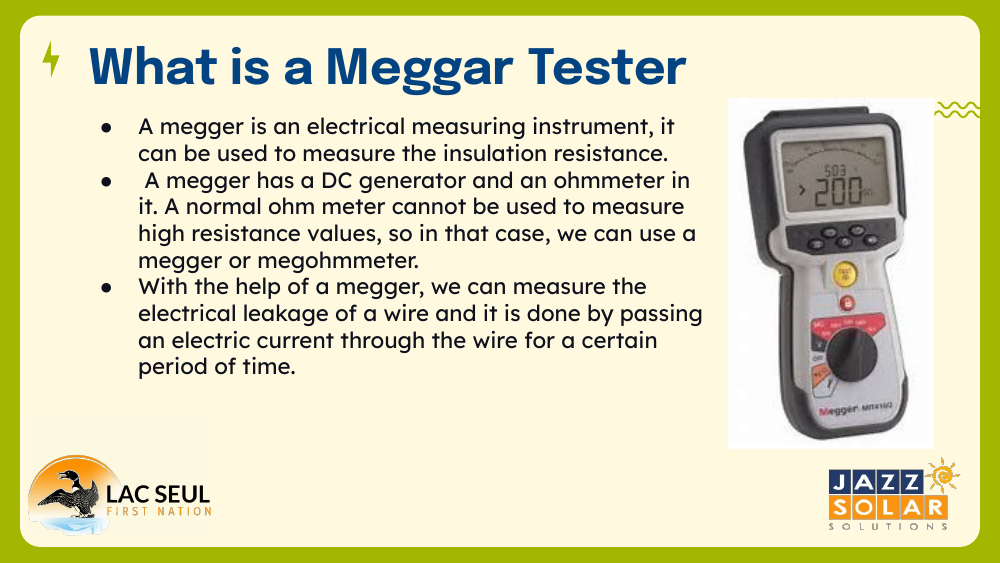
Use a megger to check insulation resistance and electrical leakage in a wire.
Module 3 · Testing Equipment & Safety
IV Curve Testing
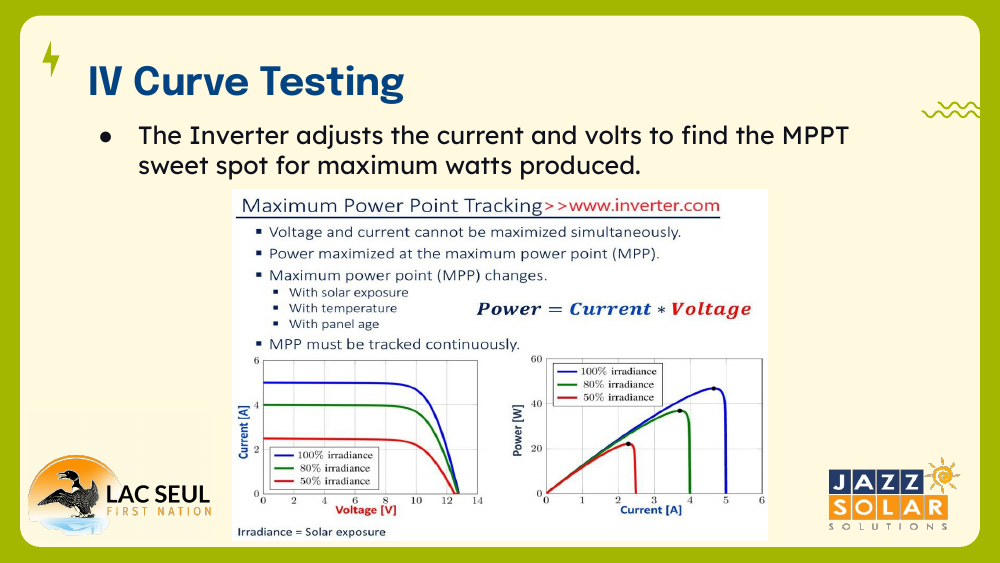
Power = Current x Voltage - the MPP shifts with sun, temperature and panel age, so it must be tracked continuously.
Module 3 · Testing Equipment & Safety
PV Safety
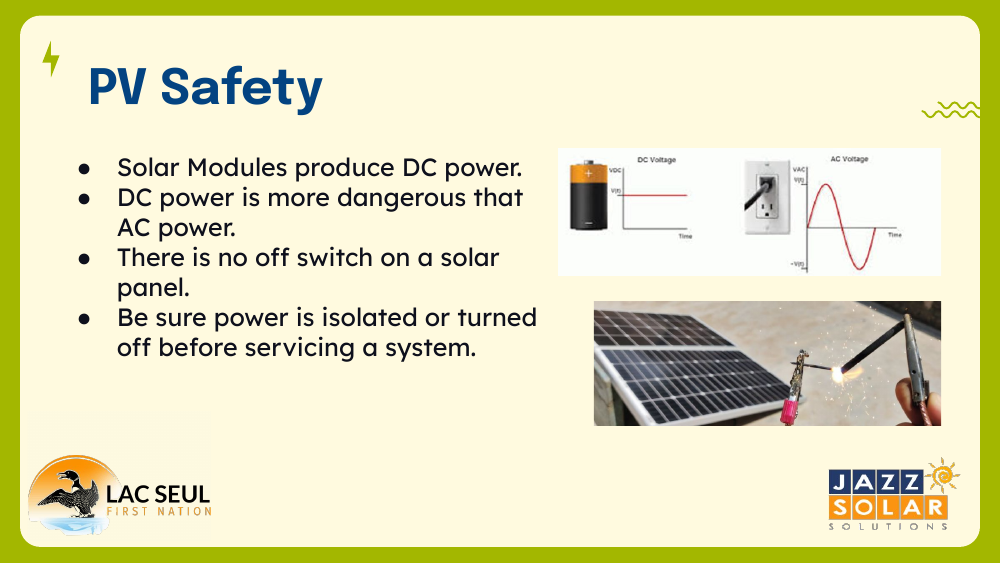
Make sure power is isolated or turned off before servicing a system.
Module 3 · Testing Equipment & Safety
Breakers, Fuses & Disconnects
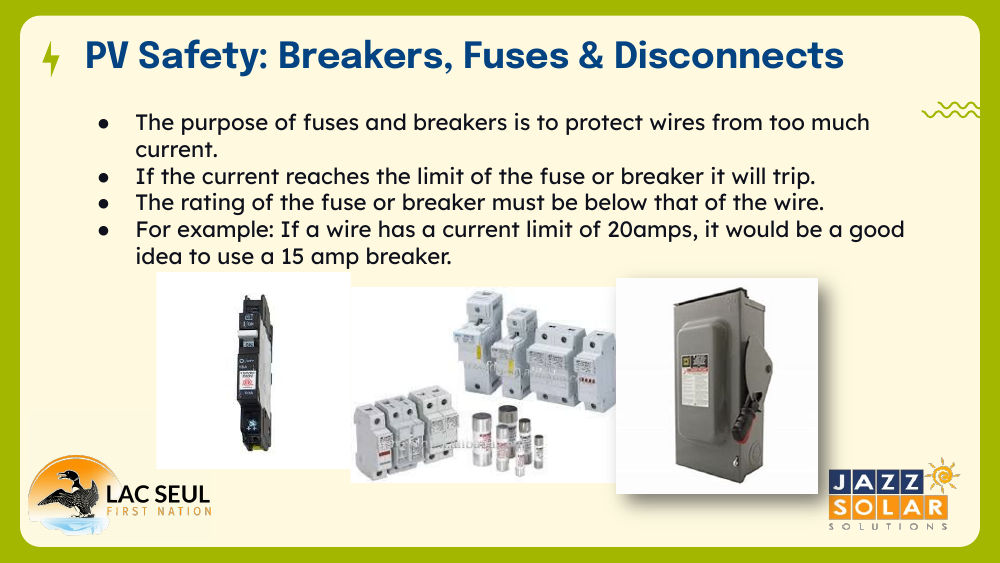
Rate the fuse or breaker below the wire (e.g. a 20 amp wire uses a 15 amp breaker).
Module 3 · Testing Equipment & Safety
Devices That Isolate Power
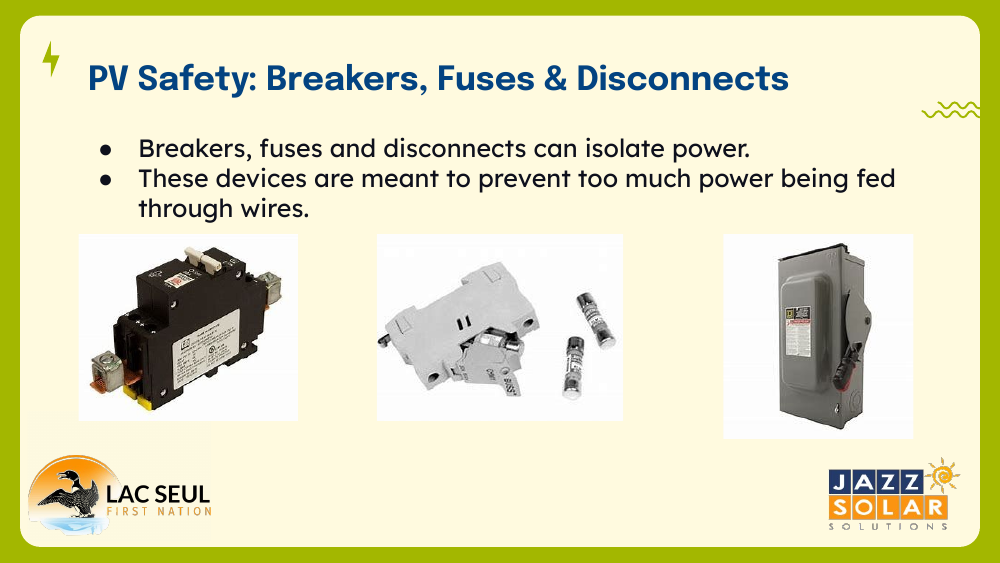
These devices stop too much power from being fed through the wires.
Module 3 · Testing Equipment & Safety
Cleaning Solar Modules
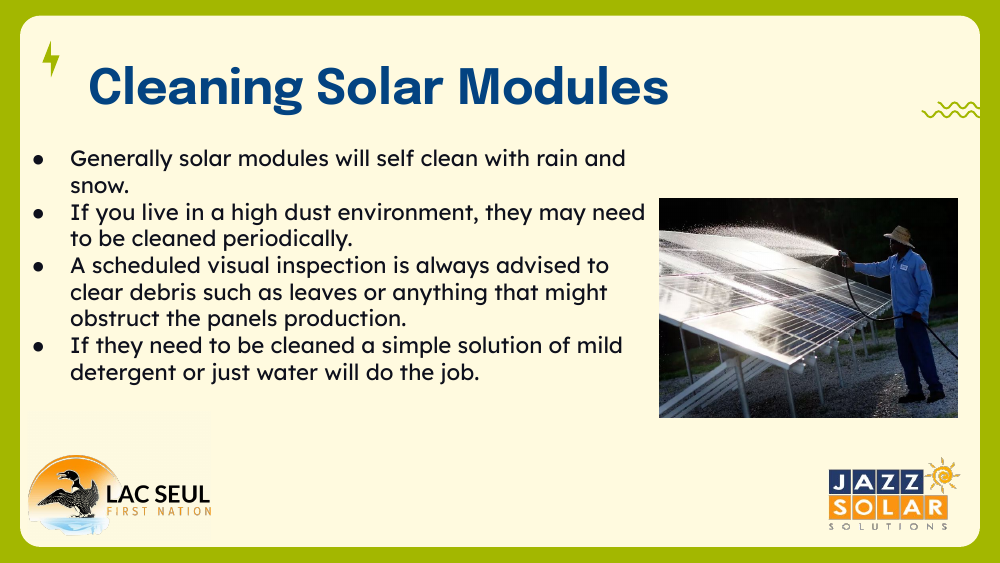
Inspect for debris and clean with mild detergent or plain water.
Module 3 · Testing Equipment & Safety
Thanks
Thanks! Questions? Email asenia@jazzsolar.com or jon@jazzsolar.com.