TTN Community Solar and Micro Utility
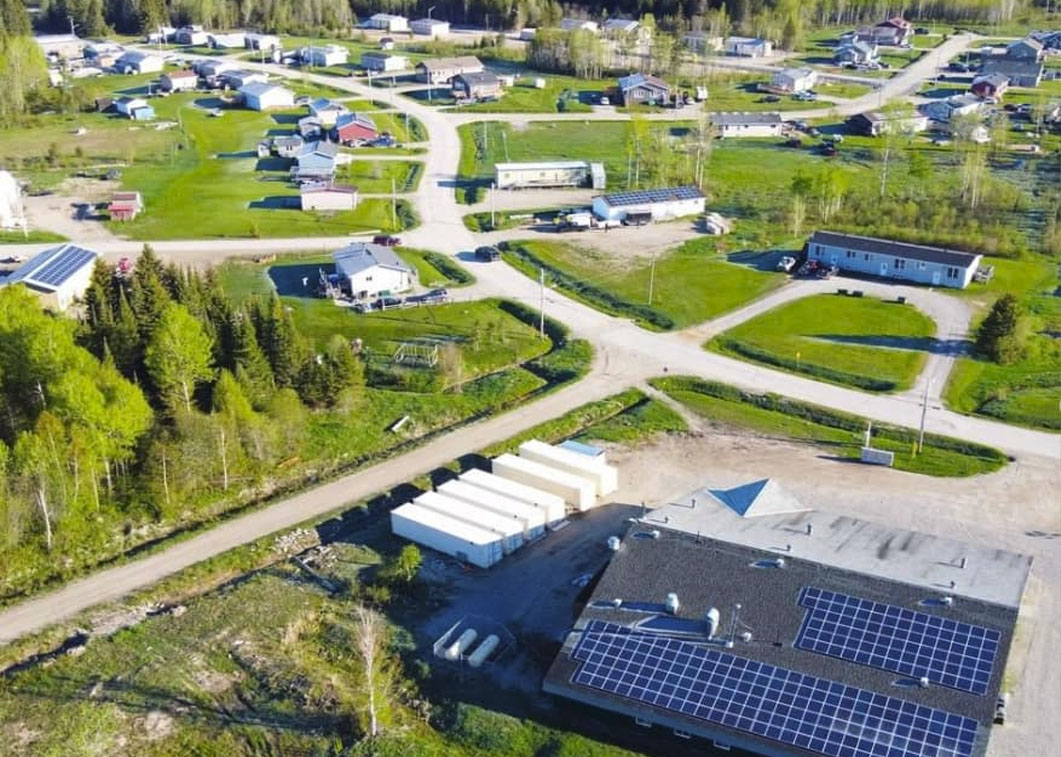
The Taykwa Tagamou Nation (TTN) is a Cree First Nations band located 20 km east of Cochrane District in Ontario, Canada. TTN has a registered population of 642 people and there are approximately 150 people currently living at the TTN reserve. As a signatory to Treaty 9, TTN is a member of the Mushkegowuk Council and Nishnawbe Aski Nation.
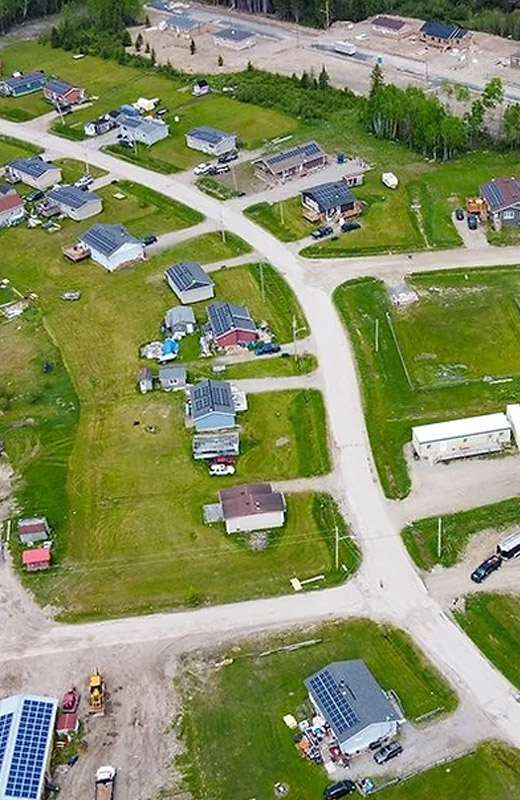
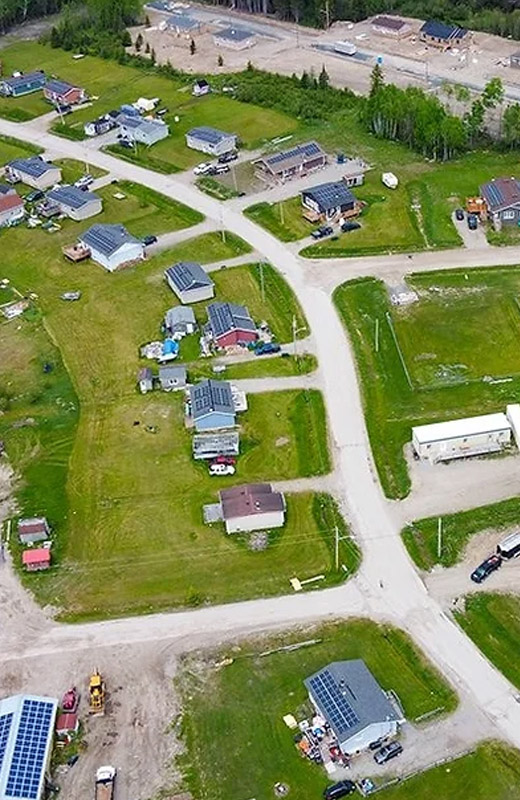
COMMUNITY SOLAR MICROGRID To assist TTN with lowering the cost of electricity consumption and moving towards clean energy sources, 42 grid connected, net-metered, roof-mounted solar photovoltaic (PV) systems (totalling 357kW DC) were installed, along with a 38kW battery energy storage in 2021. The 1077 solar panels were installed across 37 residential buildings and five band-owned buildings such as the community centre, water treatment plant, public works garage, healthy babies building, and a lands and resources trailer.
Learn more about the project through the interview with Cecile Ross on the following screens.
Cecile Ross: Interview
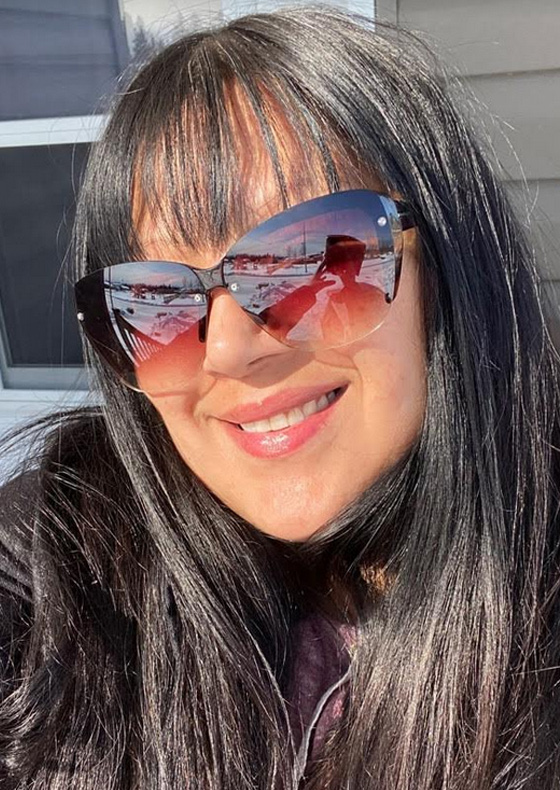
Cecile Ross is the Community Climate and Energy Manager (CCEM) at TTN. She plays a critical role in advancing the development, adoption, and implementation of a climate and energy strategy that benefits the long-term sustainability of the community.
She serves as a catalyst for change, driving the adoption of sustainable energy practices, and facilitating the community's transition to a cleaner, more resilient, and sustainable energy future.
In the next few screens, she talks about her experiences with Community Solar at TTN.
Tell us about Taykwa Tagamou Nation?
Taykwa Tagamou Nation is an Ojibwe Cree community.
We were established through the federal government on the reserve in the 1980s, I believe. Prior to that, we were in the Fraserdale corridor, near New Post Falls on the Abitibi River.
Right now, there are currently about 700 registered members; however, there are about 150 and growing members on the reserve.
How did you get interested in Solar?
At the time, I was unemployed, and I was looking at my options and what I could do for the community.
I saw a posting about education capacity. At the time, I did not understand it, nor was I familiar with the renewable energy industry. I really enjoy starting projects from scratch, and I advanced through there. I did a one-year education capacity program with IESO, and then I moved on to Community Energy Champion, which is a three-year program.
During those four years, I was able to do a lot of training, I attended workshops, and I also attended a lot of conferences. Also, working with our consultant JAZZ Solar really helped me understand the energy industry.
How did you look for funding opportunities for Solar?

I was very fortunate that when I started as a community energy liaison under the ECB, TTN had already secured a funding source with the Small Communities fund, which was 1/3 federal and 1/3 provincial, and I believe it was over $1.6 million. Then, the First Nation had to come up with 1/3 of their portion.
After reading those agreements, trying to understand and put everything together, I was able to approach the Chief and Council and explain to them: this is what the project is going to cost and this is the contribution we need from you. We also got funding from ISO, I think it was about $200,000, to lower TTN’s contribution.
In the end, TTN was able to finance $440,000 from FMPA, the First Nation Financing Authority. We also did try to approach Coral Rapids and do a presentation to the board. Unfortunately, at the time, they declined financing our projects. We will continue to work with them on other projects.
Describe your community solar project
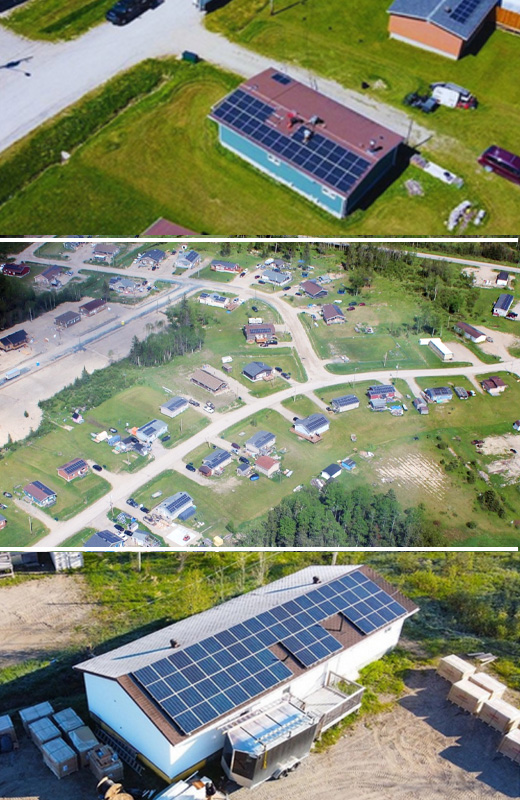
We have 37 homes that have roughly 7 kilowatts per home. So we have the solar panels on the rooftops and then we also have 5 band administration buildings and a community centre with 50 kilowatts of solar.
We also have a battery backup system within the community centre just in case the entire power goes out. At least you have a few hours to get organised if something were to happen. And we can all meet at the community centre.
Our systems are connected to the grid by net metering behind the meter system. We have a cost connection agreement with Hydro One. Each individual home had to sign these connection agreements, as well as the band-owned buildings.
Tell us about TTN’s energy team.
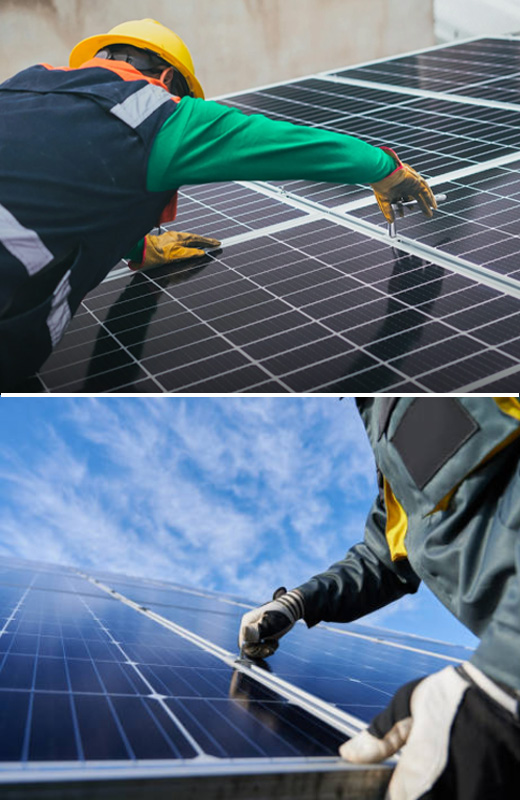
It was during the construction phase of our community solar project. We brought in a trainer, and I did a posting out into the community to see if there were any members interested in training and possibly being a part of the installation process. Sadly, this happened right during COVID. So we were very limited on the number of people that could take training. I think we had eight individuals. Out of those eight individuals who completed the training, three of them attended and were interested in the installation, so they participated in that.
Also, I had to develop an energy team for training and for maintenance and operations. I did a callout in the community. I found one member at large. He had experience with solar before. I had someone from the maintenance department join us. I wanted to see what knowledge she had and how it could benefit my team. I also had the Director- Operational Maintenance, Conrad Sutherland. I needed to make sure he knew the systems and was aware of how they were operated.
After that, we also found that some people were strong on the energy team, so I set them to recruit some more members. So I have Alex Archibald as TTN’s acting Fire Chief, as well as emergency readiness manager. I thought it would be a great fit, and he is doing extremely well. We also have Brian Iserhoff, who is our housing maintenance so I thought it would be great for him to be involved as well because he is very hands-on and did very well during the training.
How did the Chief and Council support you and your project?
Well, myself along with our consultants, JAZZ Solar, put together a presentation. We reminded the Chief and Council of the funding that was secured under the Small Communities Fund. We explained the work that we will be doing.
We worked with Derek Archibald who was at the time the Economic Development Officer. Now, he is our deputy chief. He has been involved with the process since the beginning. We've gained a lot of support from him, and he'd go to the rest of the council if we really needed something done that quickly.
Over the time of various presentations and information sessions in the community, the Chief and Council have been supportive. They are still very supportive of the work we are doing moving forward.
How did the community respond to solar?
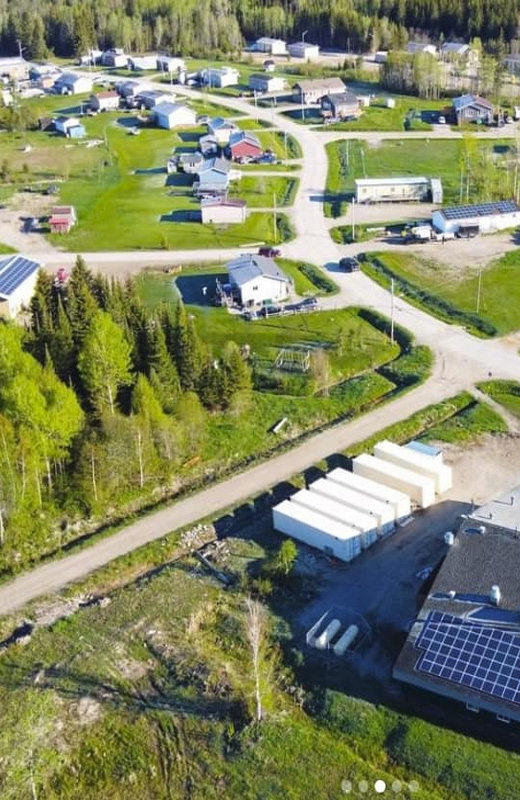
I was very fortunate to already have experience working with the community. I've done various projects prior to being involved in this energy sector.
So, I conducted a lot of information sessions where we would invite the community to the complex, we'd have a meal, we do a presentation on the work that we're doing, and then we would also do a survey. We'd offer door prizes to get people out. I also did surveys, so I'd hand those out door to door or send them out virtually. I also did a lot of postings on our Facebook community page. We've done newsletters and sent them out to the community.
I did door-to-door visits. I was glad that I have a great, great relationship with the community at large, and I also live in a community, so that makes it a lot easier.
How did your role evolve to include climate change?

During the last year of my CEC (Community Energy Champion), a three-year program, I joined the online training that the ISO was hosting for the CECs. One of the training modules had Dr. David Pearson from Laurentian University do a presentation on climate change and how climate and energy go hand in hand.
I really was inspired by that because a lot of the work I had done prior was into mining and hydroelectric development, and I found that energy is more, in my opinion, climate friendly, in a way, some people can argue that, but that is how I feel. So, after engaging with Dr. David Pearson, I came up with my colleagues to develop a new energy position for myself. We collaborated and worked together and developed TTN’s Climate and Energy management position.
So, that is the role I am currently doing. The Chief and Council supported it, and now I have a full-time position for the community, which is great.
How did you employ folks that were trained at solar installations?
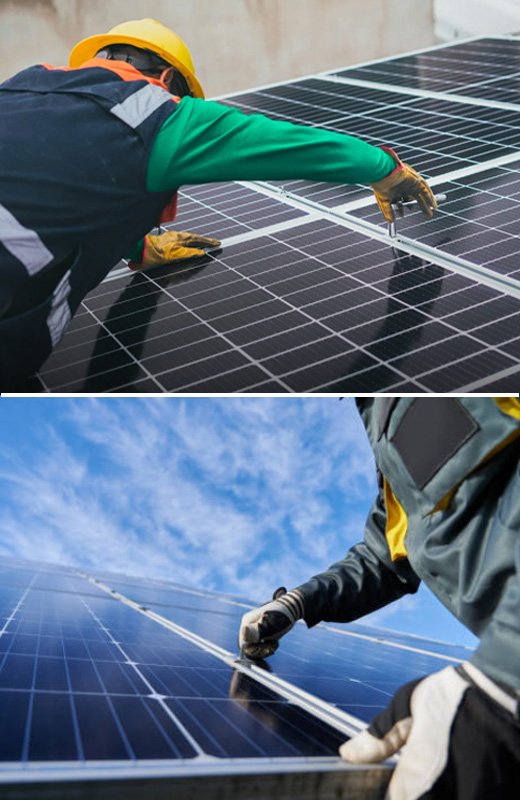
Well, after our members completed the solar installation training, I ensured that the subcontractor who was doing the installation knew that it was mandatory that they hired two TTN members as well.
So, we were very fortunate that three members were able to work during the summer months even though it was COVID.
What are the challenges faced during COVID?

Our contractors had to come from down south, so our community was very concerned about having outsiders in the reserve. However, we work closely with the health director at TTN.
They had developed protocols that they put in place for people coming in and out of the reserve. We also had a security station, so you had to register when you came in.
You had to make sure that they did the swabs and that nobody had symptoms of COVID because I believe there must have been twelve installers along with our three installers. We made sure that they didn't communicate or get close to the community members. A lot of the work was done outside on the rooftop. So we didn't have any issues. Nobody had COVID, so that was great as well.
What equipment was selected and how?

As part of infrastructure funding, it was mandatory for any expenses above $25,000 to go through an RFP (Request For Proposal) process.
The RFPs were held, and RFPs were evaluated along with the Community Energy Champion, Cecile, as well as the energy team, and were approved before issuing Notice To Proceed or NPP. NPP allowed us to move into construction.
What were the utility and infrastructure challenges?
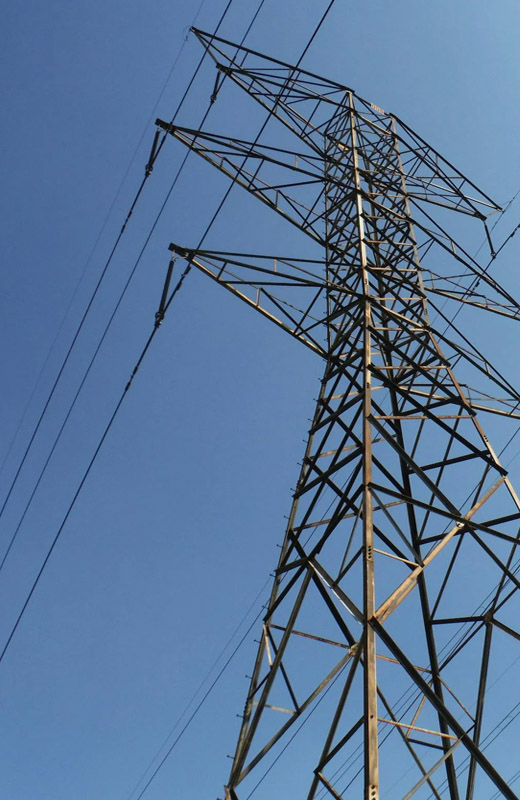
Well, sadly our First Nation is at the end of a single-phase line. So that limited our capacity that we have within the community. We had to deal with Hydro One. We are in a process of still trying to get it a 3-phase line, which is six kilometres from the main grid.
During the connection with our solar project, it was challenging because of the regulations that are set in place right now. We had to have a custom agreement, made with Hydro One so we could do all these separate connections. Instead of doing one connection agreement we had to do all single homes- 37 homes. We had to do the five administration buildings- that was a costly expense. I think we paid over $250,000 to Hydro One, to get these cost-connection agreements set up.
I had to go door-to-door and get community members who were renting to complete the forms. That was a lengthy process. It was also very discouraging at the same time because we thought this project wasn't going to move forward because of the challenges that we were facing. We had many meetings online and virtual meetings with Hydro One. It got political as well. I'm glad we had the support of Derek Archibald again, our deputy chief. It was a very challenging and disturbing time, but we got through it.
What were some of the regulatory challenges?

Originally, I thought we were going to do a ground mount. And that's what I was hoping to do because we could have set the direction of the panels more to the south. So, we could maximise our solar panels.
Unfortunately with regulations, we were unable to do a ground mount which was disappointing, so I'm really hoping that that regulation could change for First Nation communities.
The south-facing ground mount had already been sited. We had chosen a spot in the community with the Chief and Council, and instead we had to go home-by-home and do 42 different connections, rather than just one connection with a perfectly facing ground mount, that would cost a lot less as well.
What were your learnings from this experience?
During our meetings we had with Hydro One on the utility infrastructure part, we met another lady on the call that assisted us and approached us to know if we were interested in applying for the Ontario Energy Sandbox Grant.
So that grant basically is trying to get the thoughts and opinions from First Nations on how we can help change the regulatory systems to benefit the First Nation communities.
Taykwa Tagamou Nation was awarded one of five projects to do this as part of the Ontario Energy Board, a Regulatory Capacity Building- Sandbox Challenge.
Besides regulatory challenges, what were some other learnings?

Well, a lot of financial challenges. A majority of the First Nations- you know- don't have the equity. We're just starting to get more equity within our First Nations. So, financing was a challenge. TTN had to go to the First Nation Financing Authority. We were successful, and we got a loan which is great, and it was a lower interest rate for us.
There were utility challenges. Also, like I mentioned before, our three-phase line. We also had to do some upgrades on our transformers because they were at their capacity already. So, when installing our solar systems, we had to make those changes, and it was at our cost as well.
Another thing is capacity. Right now, I'm the only energy manager, and this is a fairly new position. I've been there learning a lot, but I also am going to require a team to work with me. Also, even with having electricians in our area, we got to outsource electricians, engineers and again, that's another financial cost to the funding that we do get. So, I think in my opinion, there needs to be more funding available for the First Nations to be successful in the energy sector.
Interviewer: That's a great point because in most of the communities, the Chief and Council would not fund any projects done on residential buildings because it reduces the cost for residential, but it's hard to recover those costs. This was the problem that Coral Rapids had.
What outcomes have been achieved?
After having the system set up and running the following year, we noticed a lot of reduced costs on our hydro bills. People are learning about how to conserve energy. It helped with our costs because in the north, hydro is very expensive, especially in the winter, and now so in the summer with trying to keep our homes cool because of climate change. So, there have been a lot of benefits for us. We've had no issues with the systems. We are tweaking how we connect to our Fronius system. It's a learning experience for all of us, but I think it's been a great opportunity and investment for the community.
Interviewer: So what were your bills like before? Like annual bills of $5000 plus, were not out of the ordinary?
Yes, so the majority of the people could be paying $500 to $700 a month. Now it's down to about 30 percent. The homes that have the solar systems that are facing south obviously benefit more because they have more solar generation. Unfortunately, my home is facing east, but I still have savings on my bills. We're going to be doing a comparison of what the bills were like prior to the solar systems. We're going to see the annual savings after comparing two years of our solar systems.
We've also won some awards like the OSEA award in 2021.
What plans do you have for energy going forward? Part 1
TTN has a lot of projects on the go right now, and one of the projects we completed was a Net Zero plan with Upswing Solutions. It is basically what are we going to be doing in the next 20 years. What kind of infrastructure are we going to be building within the next few years, and how can we support those buildings moving towards Net Zero?
We also receive projects from Natural Resource Canada, which is a Smart Renewable Electrification Project. Within that project, there was a lot of capacity building, not just for attending conferences and networking and not just for TTN, but we reached out to other First Nation communities. I think we captured maybe 40 First Nations, just trying to support them moving forward with their energy needs. Also, TTN has now established a limited partnership, which is now named Taykwater Springs Energy Limited Partnership.
So that's where a lot of the energy assets will be transferred to, giving us some equity as we move forward, applying for future grants and to support our applications.
What plans do you have for energy going forward? Part 2
Another idea that we came up with. It is been in the making for- I don't know over five years- is Social Energy Infrastructure. So that is basically a group of First Nations, investors, consultants, developing this company where we will provide various services that are needed within the First Nations because they do not have the capacity and they need a training plan put in place. So, we're going to use what TTN has done along with Oneida and other First Nations that have been involved. We're going to help and support them and it’s going to be indigenous lead. We're in the process of finalising the SEI.
Another project we have on the go is- we're negotiating and working with Ontario Northland- ONTC, and we're working on an EV charging station. It's going to be a pilot project and see how that goes. Hopefully later on, we're going to start generating revenue and expand on that based on any valuation after some time of the EV charging being installed.
Also, we want to look into battery storage systems. In the long run, we want to be able to generate revenue and you know, whatever we give to the grid, we want to eventually have your homeowners and the First Nation generate revenue from that. That's one of our future goals but most importantly, moving toward Net Zero within our community.
Can you talk about the conferences for First Nations?
I enjoy helping other First Nations be successful. So, under the SREPs we had two milestones where we would host two conferences or workshops. The first one was with our partner Oneida of the Thames. We hosted a couple of days of workshops in London, Ontario. There must have been 60 attendees. We had various guest speakers from funding sources such as Natural Resource Canada, the IESO. We had various guest speakers. I also did a presentation and shared what TTN has been doing. Oneida did a presentation. We went to look at their systems. We were trying to encourage other First Nations you know, like, we could do this, you could do this, and this is how we did it.
We did that one in March. Then we had another one in August, which was in my community of Taykwa Tagamou Nation which is further north from London. It's about a 10-to-12-hour drive from London. So, we captured another 15 First Nations, and we had other attendees from the previous workshop attend as well. We took them out to our solar farms that we have in the area. We went out to a nearby lake, which is an old Junior Ranger camp that TTN purchased, and we will be utilising that for mental health, family programs etc. We also are working on upgrading because that is diesel run.
So, we wanted to share with the First Nations all the different programs and projects we're working on and you know that they could do this as well. It was a great outcome, and we got a lot of good feedback. I hope to do more workshops in the future.